What Separates an Excellent Factory from an Exceptional Supplier?
By Rich Bee ·June 18, 2026 · 4 min read
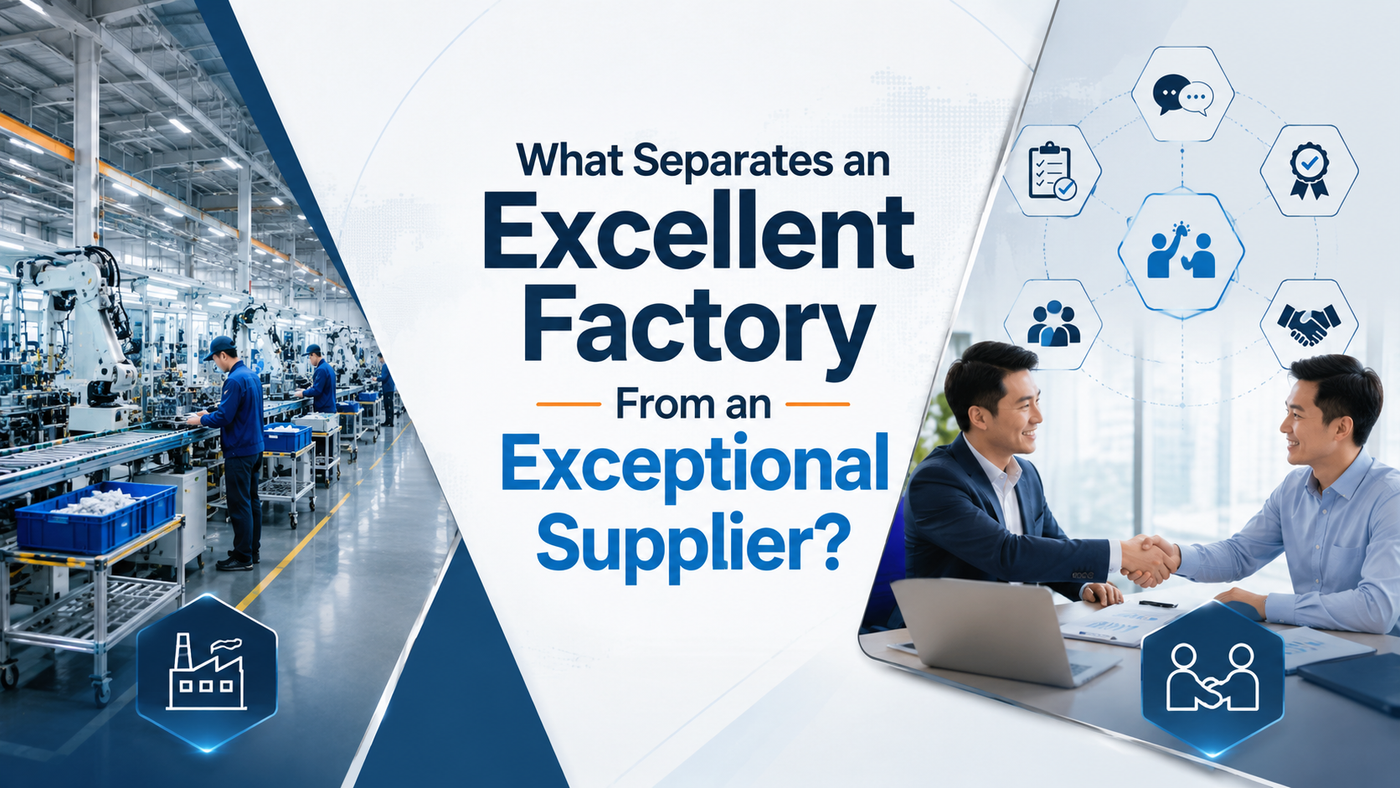
After screening more than 100 factories, we found the difference comes down to three things: capability, commitment, and reliability.
When buyers source overseas, and especially in China, the first thing they look at is usually price. That's fair. Lower prices widen your margins and make your product more competitive. But after working with factories across several industries and screening more than 100 suppliers, we keep running into the same lesson: the factory with the lowest prices isn't always the best supplier.
Some of the worst sourcing outcomes we've seen happened because the buyer picked a supplier from what they could read on a quotation sheet, not from how that supplier actually operates. What separates an excellent factory from an exceptional supplier isn't just manufacturing capability. It comes down to three questions:
- Can they do it?
- Do they want to do it well?
- Can you rely on them when things go wrong?
Those three questions are the standard we apply before we recommend any supplier to a client.
1. Capability: Can They Actually Deliver What You Need?
The first thing most buyers check is whether a factory can make the product. Real capability goes well past owning a production line. A capable supplier should have:
- Adequate production capacity
- Appropriate equipment and technical expertise
- Relevant certifications
- Experience exporting to your target market
- Familiarity with your product category
A factory might build excellent products for the domestic market. But if you sell in Europe or North America, do they understand local compliance requirements? Have they handled export documentation before? Can they meet the packaging standards your sales channels demand?
Capability isn't what a supplier claims it can do. It's what it can deliver, consistently. A supplier that can't meet your requirements isn't the right partner, no matter how cooperative it seems.
2. Commitment: Do They Want To Do It Well?
This is the part many buyers overlook. Two factories can have similar capabilities, similar prices, and similar products, and yet working with them feels completely different. The reason is attitude.
Committed suppliers tend to:
- Reply promptly and clearly
- Provide information without being chased
- Be willing to make samples
- Raise concerns early instead of hiding them
- Work with you to find solutions
Uncommitted suppliers usually tip their hand from the start. They dodge direct questions. They send incomplete information. They go quiet for days. They only get responsive when the conversation turns to payment.
Suppliers tell you a lot about themselves before an order is even placed. If communication is hard during the sales stage, it won't get easier once production starts. The ones who genuinely want a long-term relationship tend to show it long before there's a large order on the table.
3. Reliability: Can You Trust Them When Problems Happen?
No sourcing project runs perfectly. Production slips. Quality issues turn up. Logistics get disrupted with no warning. The real test is how the supplier responds.
Reliable suppliers usually have:
- Standard operating procedures
- Quality control systems
- Clear communication processes
- Escalation mechanisms
- Defined corrective actions
When something goes wrong, do they take responsibility, communicate openly, and bring solutions? Or do they shift blame and go dark? Anyone looks good when everything goes to plan. Exceptional suppliers prove their value when it doesn't. In our experience, this one factor often decides whether a supplier becomes a long-term partner or a costly mistake.
Why Price Alone Isn't Enough
Many buyers open with, "Can you give me your best price?" A better question is, "Can you consistently deliver what my business needs?"
A low price means very little if it leads to missed deadlines, defective products, customer complaints, or endless follow-ups. The cheapest supplier can quickly turn into the most expensive choice. Price matters, but it should never be judged on its own. The real cost of sourcing also includes quality, communication, reliability, and the work it takes to manage problems. The best suppliers create value beyond the quotation.
The Standard We Use
At Rich Bee, these three factors are the foundation of how we evaluate suppliers. Before recommending any factory, we ask:
- Can they do it? Do they have the capability to meet the requirements?
- Do they want to do it well? Do they show commitment through their actions and communication?
- Can we rely on them? Do they have the systems and the mindset to handle problems responsibly?
Exceptional suppliers aren't just manufacturers. They're partners who help a business grow with confidence.
Final Thoughts
Finding a supplier isn't only about finding someone who can make your product. It's about finding someone who can support your business as it grows.
After screening more than 100 factories, we've learned that the best suppliers aren't always the biggest, the cheapest, or the most impressive at first glance. The ones worth a long-term relationship share three traits: they have the capability to deliver, the commitment to do things right, and the reliability to stand by you when challenges arise. That's what separates an excellent factory from an exceptional supplier.


Put this into practice
Have a supplier or product in mind?
Tell our advisor what you are sourcing and the supplier you are eyeing. We will flag the basics — license, trade history, obvious risk — at no cost and with no sales follow-up.