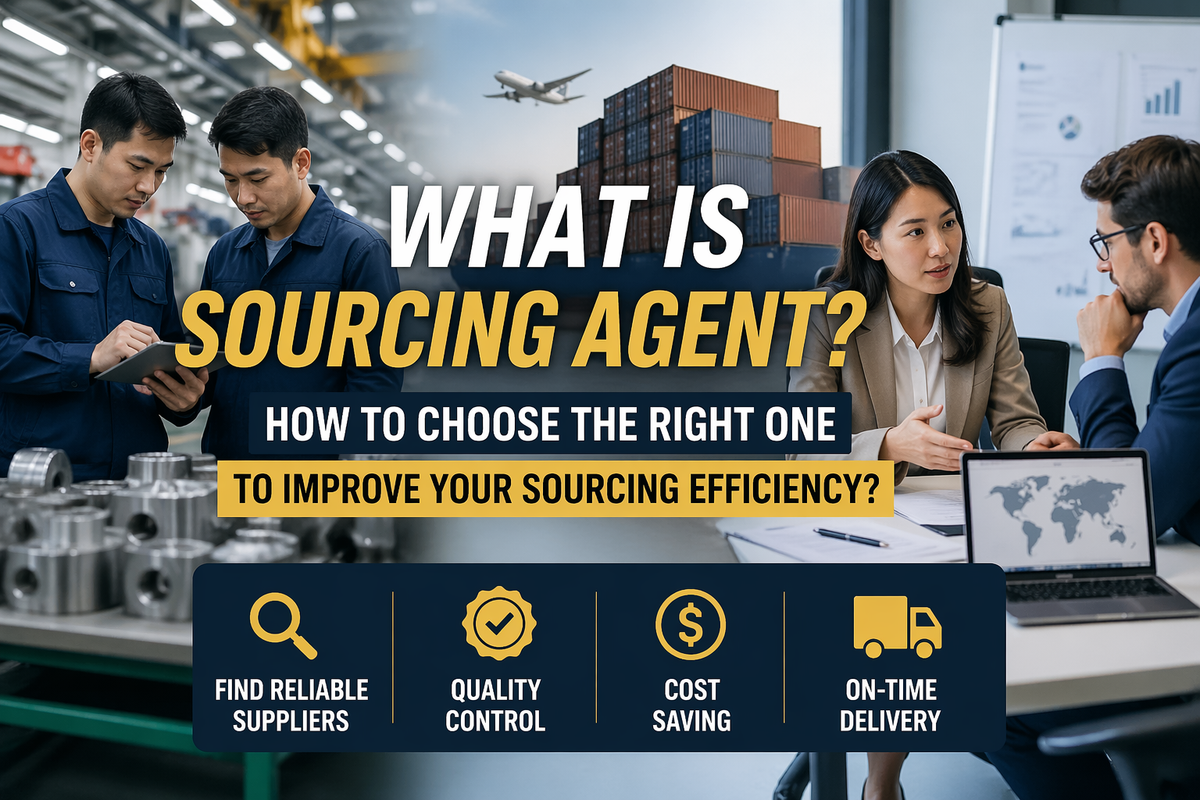
What Is a Sourcing Agent, and How Do You Choose the Right One?
April 22, 2026
What Is a Sourcing Agent?
A sourcing agent is a local professional or team that helps overseas buyers find, evaluate, and manage suppliers, usually in manufacturing markets like China where doing this remotely is hard.
The agent works as your representative on the ground. They sit between you and the factories and handle the differences and day-to-day operational problems you can't easily manage from another country.
Browsing an online platform gets you listings. Working with a sourcing agent gets you vetted suppliers, a defined process, and someone executing on site.
What a sourcing agent typically handles:
- Finding and verifying suppliers
- Negotiating price and analyzing cost
- Following production and managing timelines
- Quality control and inspection
- Coordinating logistics and shipping
A good agent does more than find factories. The real job is reducing uncertainty, keeping communication clean, and helping you stay in control from start to finish.
Why Many Buyers Need a Sourcing Agent
Sourcing straight from Alibaba or by emailing factories looks simple enough. The catch is that most sourcing problems don't come from finding a supplier. They come from execution.
The usual problems:
- Mismatched expectations because the specs were vague
- Quality that drifts from one batch to the next
- Production delays from bad planning or an overbooked factory
- No visibility into what's actually happening on the floor
- Problems you can't resolve from thousands of miles away
With no one on the ground, you end up working off assumptions and partial information. In sourcing, assumptions get expensive fast.
A capable agent helps you:
- Screen out unreliable or unsuitable suppliers before they cost you anything
- Turn your requirements into instructions the factory can actually follow
- Watch production and flag risks early
- Catch issues before they grow into expensive ones
That's the shift: sourcing stops being something you react to and becomes a process you run.
Not All Sourcing Agents Are the Same
A common assumption is that every sourcing agent offers roughly the same thing. The gap between a good one and a bad one is wide. Choosing an agent isn't really about the fee. It's about how they work and where their incentives point.
Three things worth checking before you commit:
Transparency
Trust starts here. A reliable agent should be able to explain, without hedging:
- How they pick and evaluate suppliers
- How they charge you: commission or a service fee
- Whether the factory pays them anything
- How they handle quality control and risk
When that's unclear, you tend to get hidden costs, supplier picks bent toward the agent's interests, and incentives that don't line up with yours. If you don't know how your agent makes money, you can't fully trust the calls they make for you.
Process Control
Sourcing isn't one action. It's a sequence. A professional agent runs a defined workflow, with:
- Steps for validating and approving samples
- Production checkpoints that are set in advance
- Clear inspection standards and criteria
- A plan for escalating when something goes wrong
Without a structured process, the outcome comes down to luck instead of control. Plenty of inexperienced agents lean on a reassuring "don't worry, we'll handle it." With no documented steps behind that, there's no accountability. A solid process produces consistency, and consistency is what separates sourcing that works from sourcing that keeps failing.
Communication Quality
Communication is the factor buyers underrate most. A good agent has to:
- Fully grasp your product, your expectations, and where it sits in the market
- Pass those requirements to the factory accurately
- Spot misunderstandings early and fix them
- Send you clear updates on time
Weak communication produces wrong samples, production errors, delays, and a lot of frustration. More often than people think, what looks like a factory problem is really a communication failure.
What a Good Sourcing Agent Actually Improves
The right agent saves you time, but that's the smallest part. The bigger gains show up in three areas.
Consistency
Consistency is one of the harder things to get out of manufacturing. A good agent makes sure production follows the agreed standards, quality holds steady across batches, and variation stays inside acceptable limits. Fewer surprises, and surprises are what cost you.
Speed
Speed isn't only about production time. It's also faster decisions, faster problem-solving, and shorter communication cycles. An experienced agent sees issues coming and heads off the delay instead of scrambling once it's already happening.
Cost Efficiency
Most buyers fixate on unit price. The real cost of sourcing also includes:
- Quality failures
- Late shipments
- Rework and replacements
- Sales you lost while you waited
A good agent works to lower your total cost, not just the number on the quote. The most expensive problems in sourcing are usually the ones you didn't see coming.
Common Mistakes When Choosing a Sourcing Agent
Knowing what to avoid matters as much as knowing what to look for. A few mistakes come up again and again.
Picking the cheapest fee. A cheaper agent may cut corners, run no real process, or put factory commissions ahead of your interests.
Trusting connections over systems. Some agents talk up their factory relationships, but relationships without a process don't guarantee results.
Leaving expectations undefined. If roles and responsibilities aren't spelled out, you'll get misalignment.
Treating the agent as a middleman instead of a partner. You get the best results when the agent is built into your workflow, not kept at arm's length as an outside helper.
When Do You Need a Sourcing Agent?
Not every buyer needs one. They earn their keep when:
- You're new to sourcing in China
- Your product is customized or technically complex
- You can't get to the factories often
- You want to cut operational risk
For simple, standardized products and buyers who already know the ropes, direct sourcing can work fine. As complexity climbs, an agent is worth a lot more.
Final Thoughts
A sourcing agent isn't just a middleman. The right one becomes part of how you source. The wrong one is just another layer of risk.
So the question isn't "Do I need a sourcing agent?" It's "Am I choosing one that improves my control, reduces my risk, and strengthens my process?"
Key Takeaway
The point of sourcing isn't only to find a supplier. It's to build a system that delivers consistent, predictable results, and the right sourcing agent is what makes that system run.